Calls and data
Build the values, expressions, member reads, and method calls that make gameplay happen.
On this page
Most of what a method does is call other code and move values around: ask another component to do something, read a variable, write a property, combine two numbers, pick an element out of a list. On the canvas, values move through pins while nodes perform the work. These guides cover each of those tasks.
Round Trip reads these operations from ordinary C# and lets you build the supported ones on the canvas. Expressions that calculate values and GET pills stay off the white execution path. Calls and SET nodes join it when they perform work. The colors tell you where a call lives before you inspect its details.
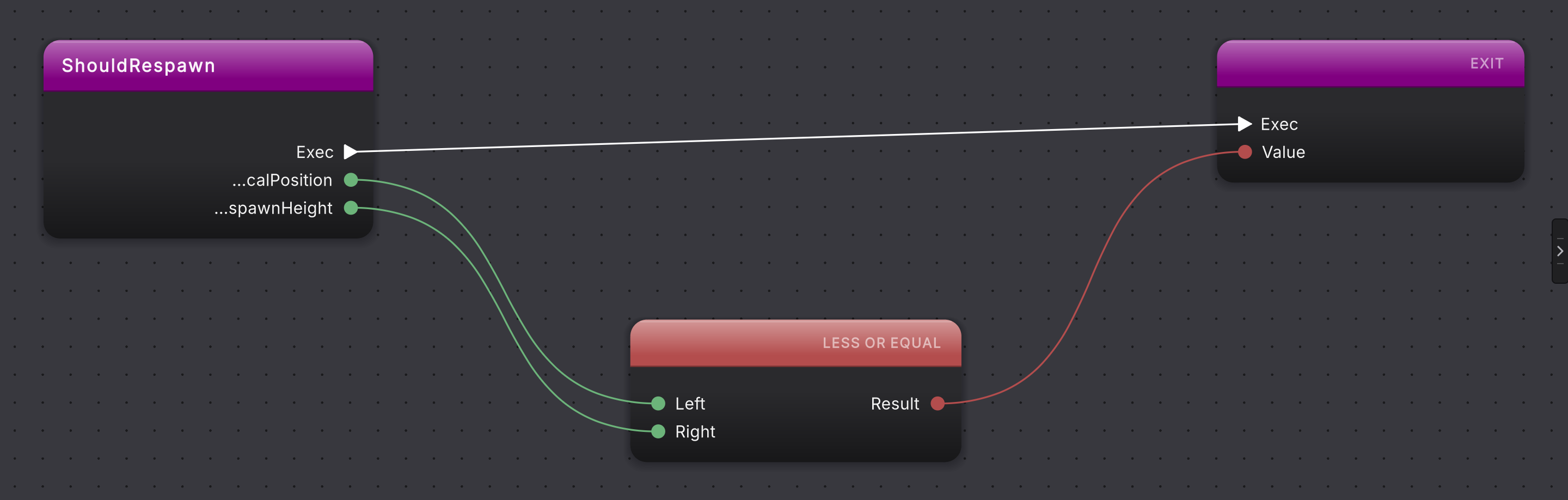
Compare two separate Platformer methods. One asks another component to act; the other works out a value for a caller. The white wire is the quickest way to tell them apart.
Calls do work; expressions supply answers
Select a screenshot to enlarge it.
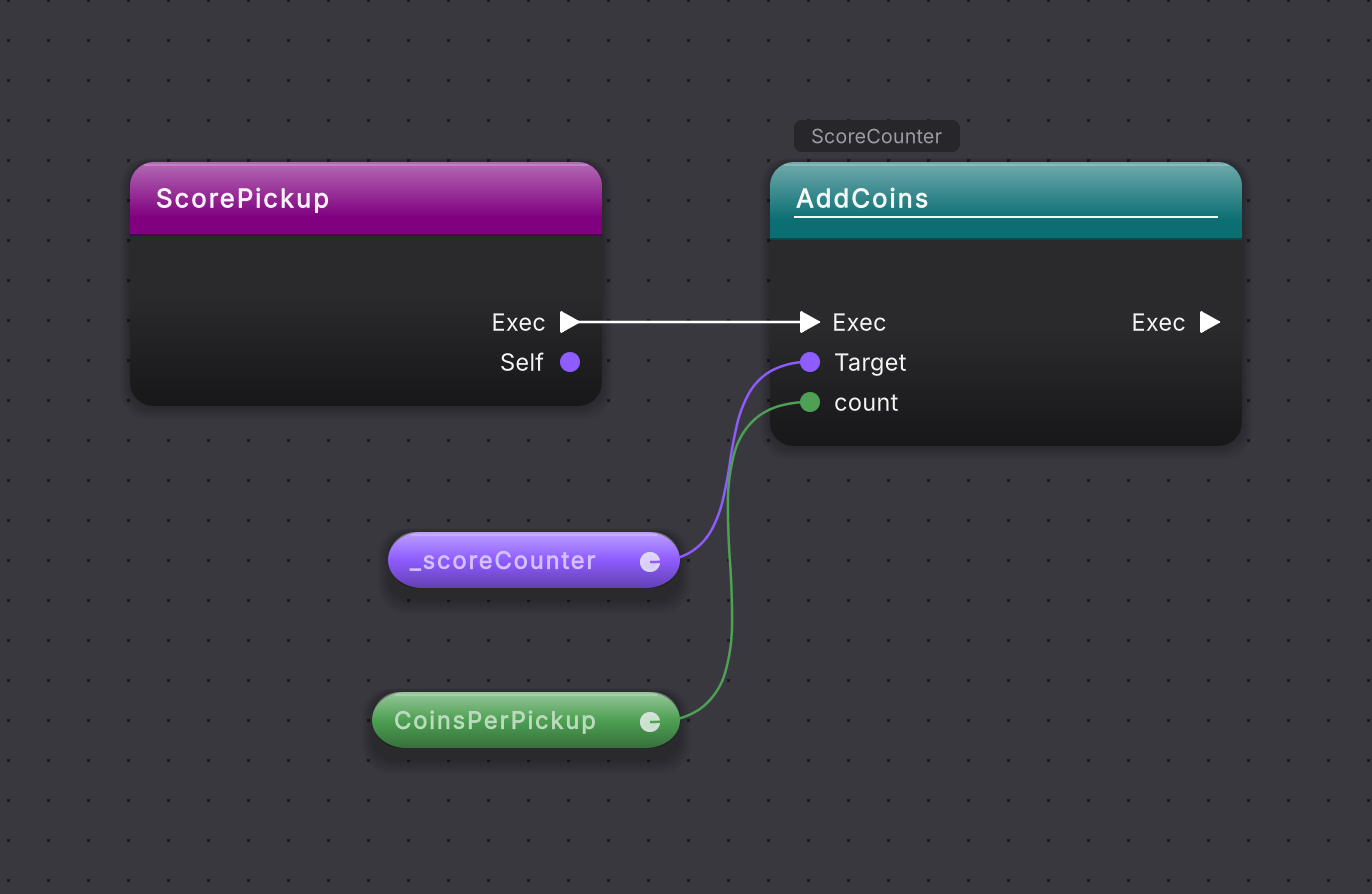
- Method calls covers finding a call, target pins, arguments, passing a method as a value, and the colors that show where a method lives.
- Get and set shows compact GET pills, SET nodes, static members, properties, and reading values through other objects.
- Operators and expressions covers arithmetic, string joins, comparisons, logic, conditional values, and operator changes.
- Arrays, tuples, and ranges covers construction, indexing, slices, tuple elements, and deconstruction.
- Enums and data classes shows how to create C# types for named states and tunable variables.
Round Trip supports less C# than the compiler can read. A marked placeholder tells you that part cannot be shown or safely rewritten on the canvas; it is not permission to rewrite that statement. Keep the supported C# guide nearby when you meet an unfamiliar construct.